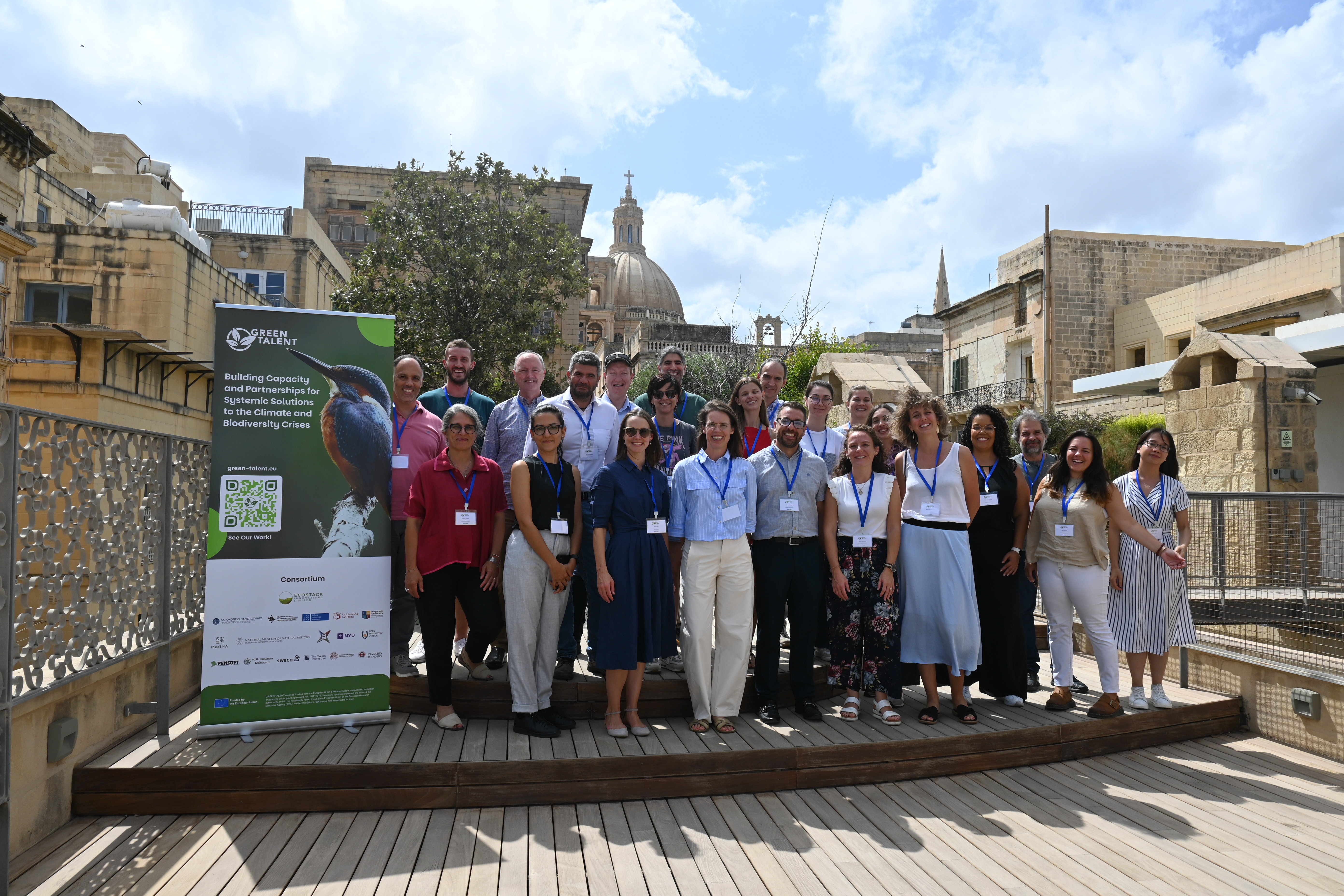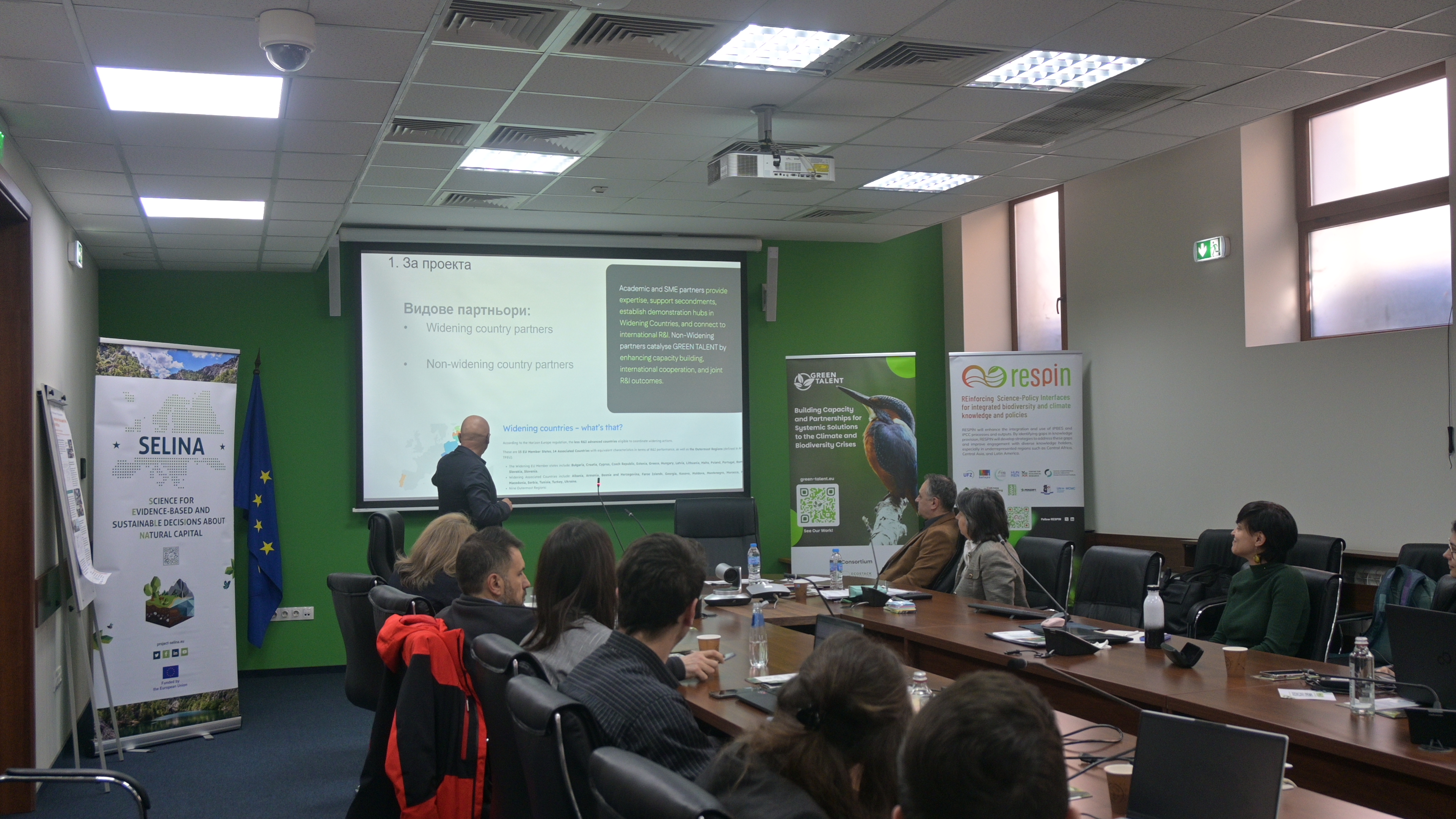
On the 25th of February, the first Green Talent DemoHubs workshop was held in Sofia, Bulgaria, bringing together scientists, policy experts, and stakeholders to discuss how global scientific assessments on biodiversity and climate change can be better implemented at the national level.
The workshop highlighted the role of the SELINA project in strengthening the existing community of practice by linking biodiversity data, research, and policy. This initiative brings together partners working on integrating museum and biodiversity records from the National Museum of Natural History at the Bulgarian Academy of Sciences, sharing biodiversity data at the science-policy interface through Pensoft, and incorporating IPBES and IPCC outputs into decision-making processes for both public institutions and private stakeholders through the National Institute of Geophysics, Geodesy and Geography at the Bulgarian Academy of Sciences.
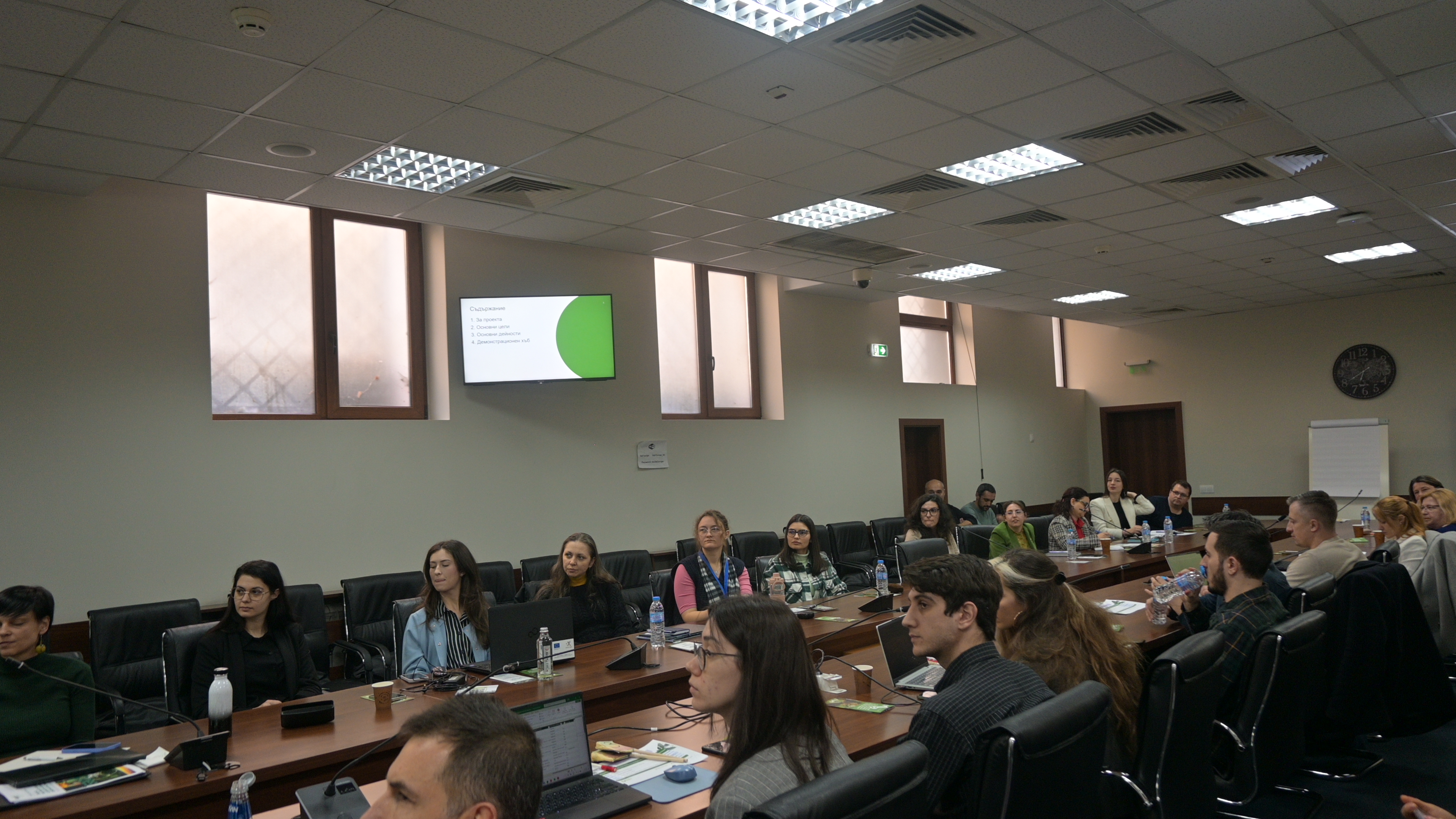
Valeri Georgiev, head of the Biodiversity Department of the Directorate for National Service for Nature Protection, opened the meeting and highlighted the importance of stronger collaboration between science, policy, and business at the local and regional levels. Kalina Stoyanova presented the work of IPBES, established in 2012 to strengthen the science-policy interface on biodiversity and ecosystem services. Ivona Grozeva emphasised the growing importance of international scientific bodies, noting the increasing cooperation between the Intergovernmental Panel on Climate Change (IPCC) and the Intergovernmental Science-Policy Platform on Biodiversity and Ecosystem Services (IPBES), which together provide a more comprehensive scientific basis for tackling climate change and biodiversity loss.
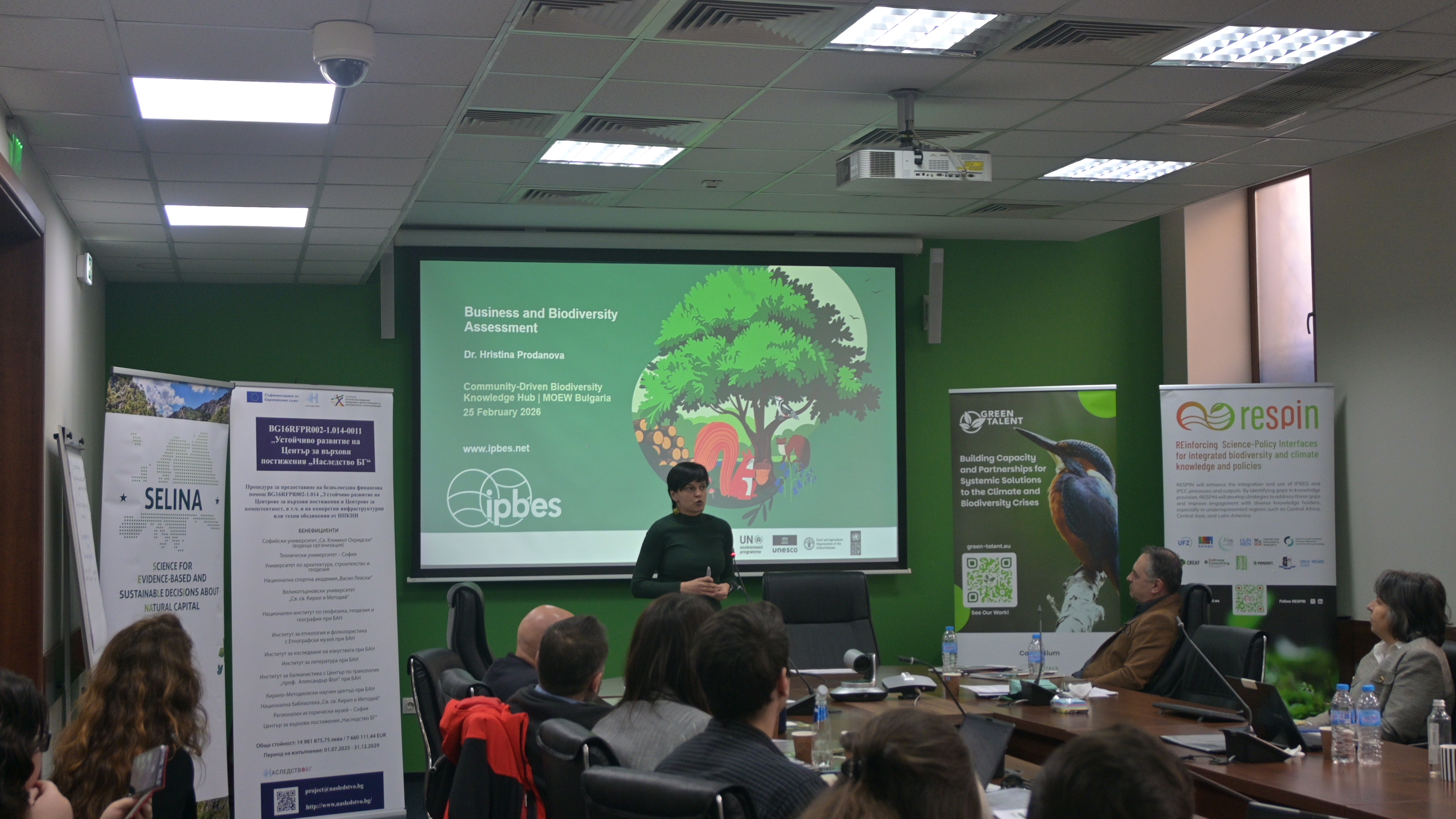
Hristina Prodanova, national coordinator for the scientific component, discussed Bulgaria’s participation in IPBES since joining the platform in 2017. Despite the country’s strong scientific potential, Bulgarian participation in IPBES reports remains limited. However, several Bulgarian experts have recently contributed to reports, signalling growing engagement with the platform’s work. Stoian Nedkov also presented the Green Talent project, outlining the concept of the demonstration hubs and the motivation behind focusing on topics such as the work of the IPCC and IPBES.
In the second part of the workshop, Stoyan Nedkov introduced the concept of transformative change, emphasising that addressing biodiversity loss requires tackling its root causes and fundamentally rethinking the relationship between society and nature. Hristina Prodanova also discussed the findings of the IPBES assessment on business and biodiversity, which examines both the negative impacts of economic activity on ecosystems and the opportunities for businesses to contribute to nature protection.
Participants then worked in groups to discuss how IPBES reports and recommendations can be applied in the Bulgarian context, identifying key challenges such as limited environmental education, weak communication between science and business, and the need for stronger institutional coordination. The workshop also presented plans to promote IPBES knowledge and findings among students and young researchers, aiming to increase awareness and engagement with biodiversity and climate challenges.
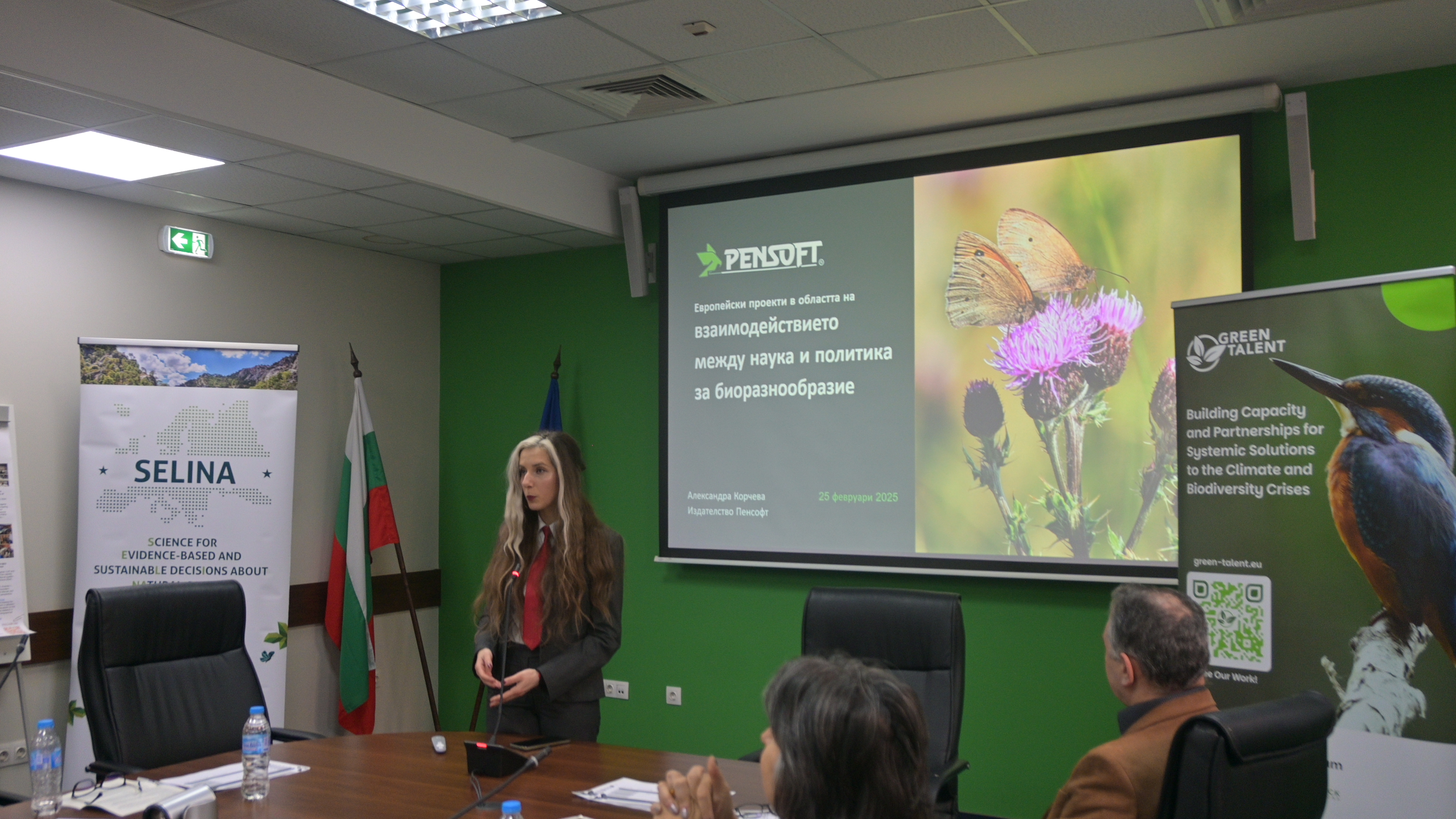
The event concluded with a commitment to continue the dialogue and strengthen cooperation between scientists, policymakers, and other key stakeholders in Bulgaria.