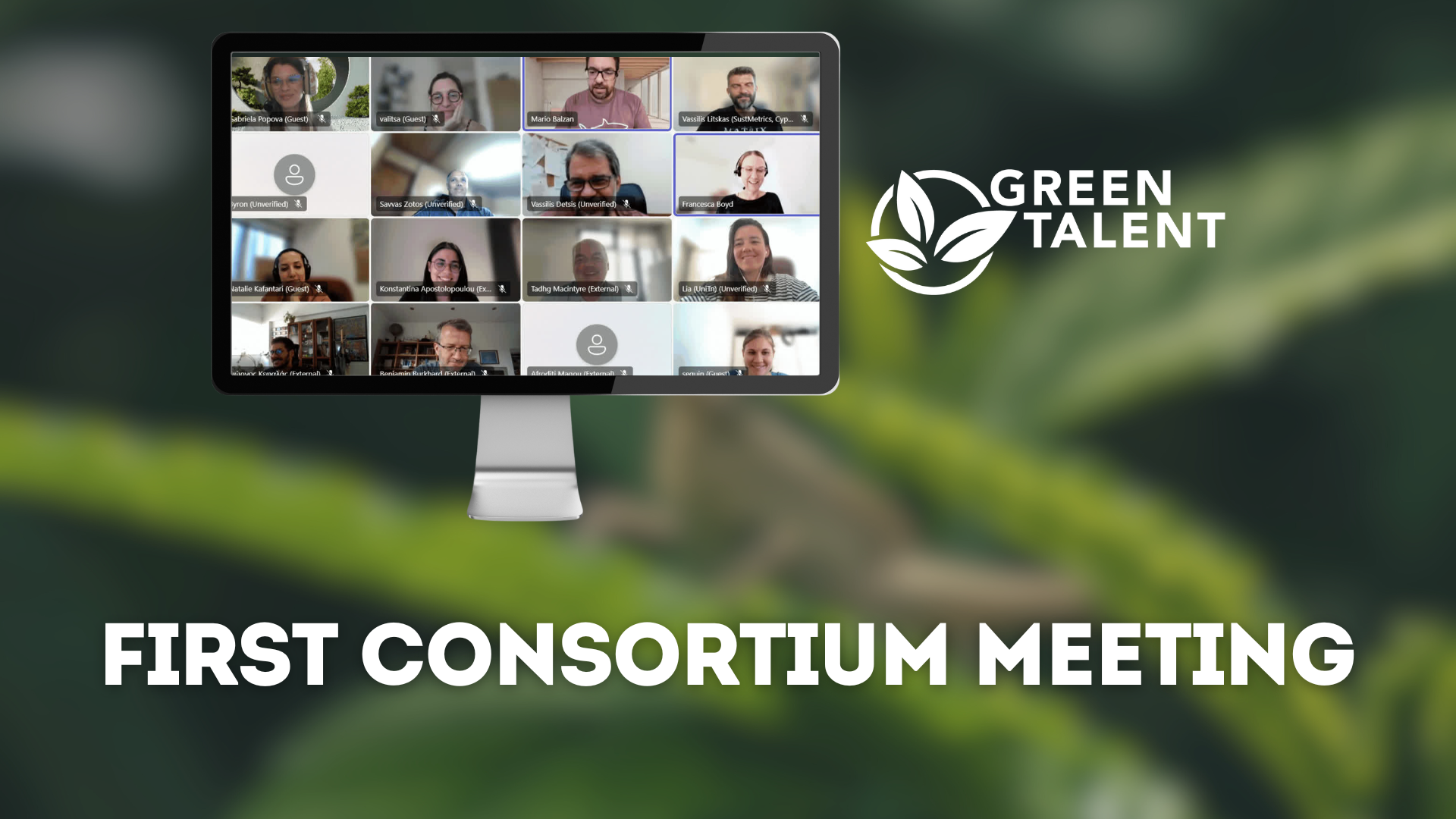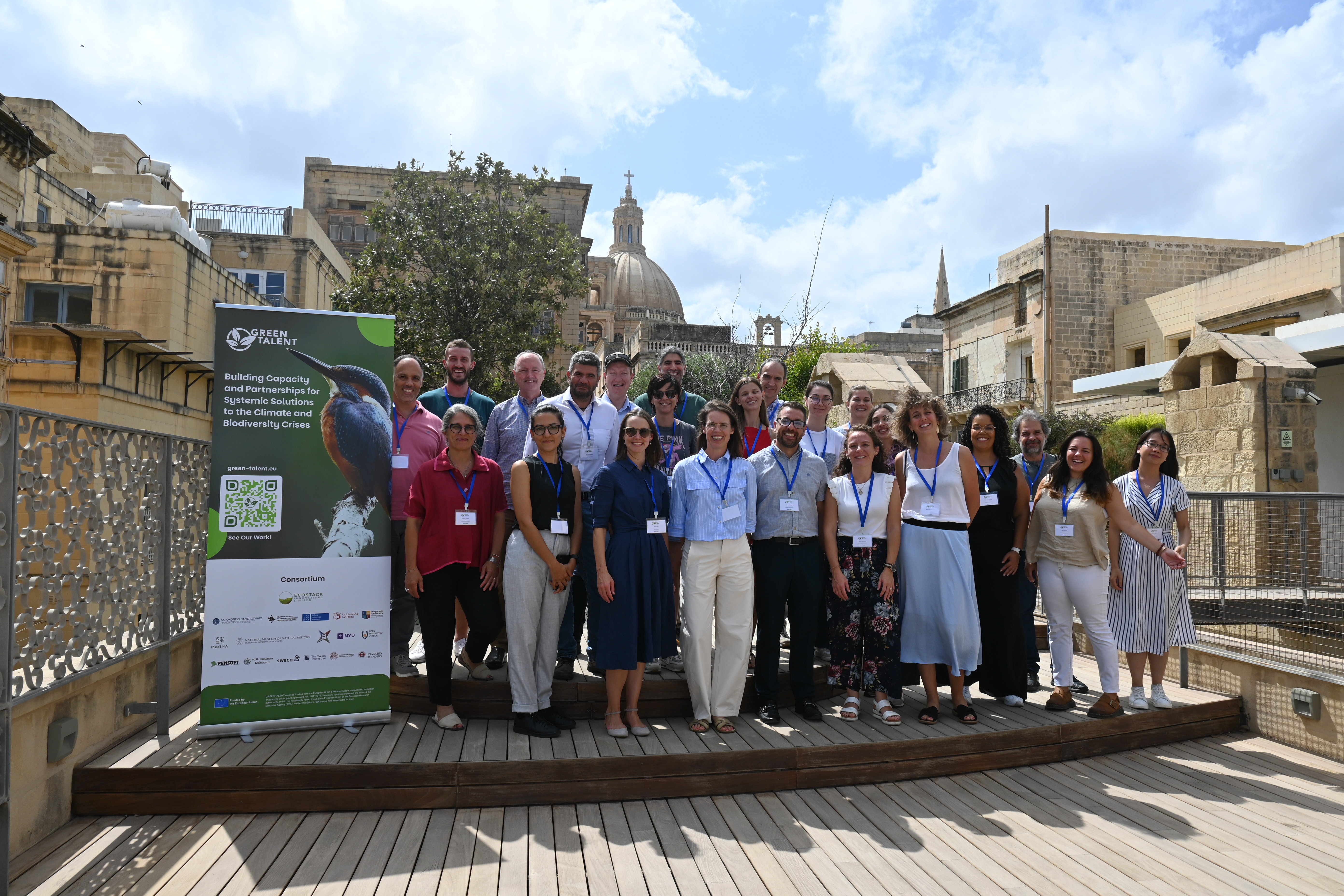
On 10 December, Green Talent held its first public webinar, where representatives from each Widening Country presented the project’s dedicated Demonstration Hubs. This webinar was an opportunity for all consortium members to gather together and explore how local action, innovation in science, and policy intersect across Green Talent’s Widening Countries - Malta, Cyprus, Greece, and Bulgaria. The webinar was hosted and organised by Ecostack Innovations, with Mario Balzan, project coordinator and founder of Ecostack Innovations, moderating the discussions and sharing interesting insights on the goals and mission of the project.
In their ambition to tackle biodiversity loss and climate change, members from each respective Demonstration Hub offered community-driven environmental solutions, showcasing their approaches, future plans, and how their knowledge could be used to create real impact on the environment. During the discussion, DemoHubs representatives highlighted the expected outcomes and potential links between hubs, emphasising on the emerging connections between the Bulgarian and Greek hubs due to shared historical records for biodiversity research. In addition, the project’s secondments were also raised in the conversation, addressing opportunities of remote collaboration, as well as work intensity and the importance of open communication and mutual understanding in order to make the most out of the secondments.
A detailed overview of each Demonstration Hub’s presentation can be found below.
Malta
The Malta Demonstration Hub explores how nature-based solutions can enhance biodiversity, climate resilience, and community well-being across urban and rural areas, while supporting businesses in shifting toward nature-positive models. Led by Ecostack Innovations, in partnership with the University of Malta, it links research to real-world action to support ecosystems, well-being, and a sustainable green economy by uniting researchers, policymakers, businesses, and civil society to co-develop and apply nature-based solutions. Future collaboration is expected with the Cyprus Hub, as both pilots focus on NbS for climate resilience and biodiversity.
Cyprus
The Cyprus Demonstration Hub’s aim is to confront climate change in Cyprus through nature-based solutions and sustainable agroecosystem practices across marginal rural-urban gradients. The Cyprus pilot plans to work closely with farmers and local agriculture communities to help them adapt, as well as restore dry, degraded agricultural land, and make communities more resilient to climate change, while also protecting ecosystems. Led by The Cyprus Institute and Open University of Cyprus, and in close collaboration with Sustainability Metrics, the Cyprus Demonstration Hub finds commonalities with the Bulgarian Hub due to similar co-design community practices.
Greece
The Greece Demonstration Hub focuses on using diversity assessment, cultural heritage, and advanced data analytics to tackle biodiversity loss and development pressures in the Mediterranean region, especially in the Greek islands. It builds national capacity for ecosystem-based solutions and supports sustainable planning that includes cultural heritage by engaging island communities and policy-makers to co-develop knowledge on ecosystem services. In addition, it monitors land and seascape changes, using machine-learning tools to identify environmental drivers. Led by The Mediterranean Institute for Nature and Anthropos and partnered with University of Crete and Harokopio University of Athens, it seeks to establish strong links with the Cyprus Hub based on their shared challenges, language, and approaches.
Bulgaria
The Bulgarian Demonstration Hub explores ways to strengthen the already established community of practice, created by the SELINA project, sharing biodiversity data at the science-policy level and integrating museum and biodiversity records. It aims to expand the existing community by incorporating IPBES and IPCC outputs for public and private decision-making. Led by National Institute of Geophysics, Geodesy and Geography (NIGGG) at the Bulgarian Academy of Sciences (BAS) and National Museum of Natural History at the Bulgarian Academy of Sciences, in collaboration with Pensoft Publishers, it seeks to overcome the lack of overall implementation of IPBES and IPCC materials, while advancing national capacity. It finds strong correlations with the Cyprus Hub because of the common co-design community practices.
The webinar wrapped up with an interactive brainstorming activity on a Miro board, inviting all participants to share hub-specific biodiversity and climate challenges, stakeholder groups, and other potential collaborations. Make sure to keep posted on further updates regarding research outputs, collaborations, as well as news about Green Talent’s Demonstration Hubs.